
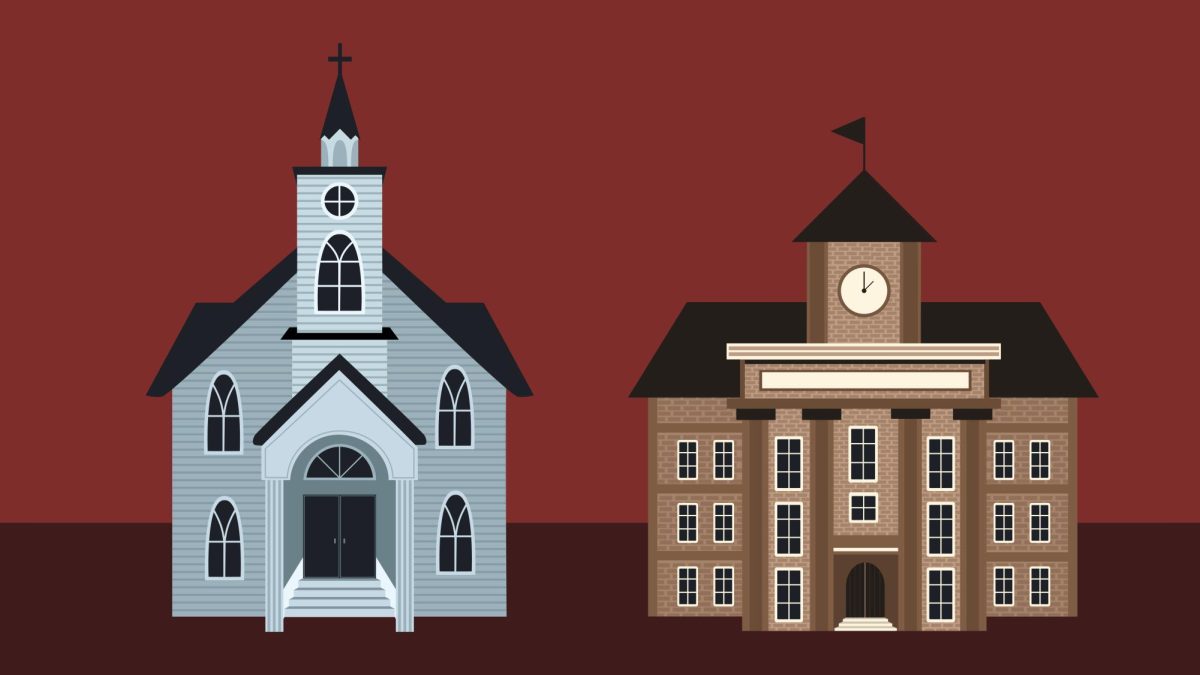
SB 268 is a new bill that allows Utah teachers to discuss religion in the Utah school curriculum. This bill, also known as the “Religious Curriculum in School” bill, protects educators’ right to explain religious history and its impact on the history of the United States.
The bill is a Christian-oriented bill that protects the rights of factual religion in education, but includes additional protections for Christian historical documents. SB 268 also includes a mandatory addition of “In God We Trust” to all schools. All religions are important to America’s history.
We must keep religion in education for the educational health of all Utahns. SB 268 must protect all religious education in Utah, not just Christianity.
The importance of learning about religion
Having a well-rounded education about religion is important. According to the National Council for the Social Studies (NCSS), learning about religion can “amplify diverse voices, combat intolerance, and create opportunities for community building.”
The Pew Research Center released a study in 2019 about Americans’ understanding of various religions. The study found that U.S. citizens with the most religiously diverse networks had the highest amount of religious knowledge in the survey.
Without an unbiased understanding of various religions around the world and the impact they’ve had on history, taking a stance on political issues (whether within the U.S. or internationally) can be challenging.
A 2024 article from Interfaith America remarks that non-devotional religious education is “essential at elementary, middle, and high school levels to lessen prejudice that otherwise results from religious illiteracy.” Non-devotional religious education is the teaching of religion objectively, without religious practice or bias in the teaching. Walter Feinberg, a professor in education at the University of Illinois Urbana-Champaign, believes that teaching non-devotional religion is a requirement for fostering a democratic body in the modern age.
SB 268 doesn’t encourage indoctrination of any religion, nor does it allow for religious practice in school. It should simply give educators the freedom to discuss how any religion has shaped our history.
Protecting religion in education
SB 268 tackles more than just religious teachings and has an impact on the teaching of civil rights. This bill gives teachers the right to read and discuss how religion impacts Martin Luther King Jr.’s “Letter from Birmingham Jail,” an important document for the civil rights movement.
The bill also gives educators the safety to discuss religion’s influence on topics that are under fire in Trump’s Project 2025. Topics including the abolition of slavery, women’s suffrage, child labor, immigrant aid, anti-lynching movements and the United States’ opposition to fascism and communism are protected under SB 268.
Project 2025, U.S. President Donald Trump’s “blueprint” for his second presidency, would devastate education across the U.S. This education plan would cut funds, which would directly impact 2.8 million students. Additionally, it would impose a national-level censorship on all education in the US.
Importantly, Utah’s legislature states that “political, atheistic, sectarian, religious or denominational doctrine may not be taught in the public schools.”
These protections, paired with SB 268, prepare Utah’s education system for a clear, well-rounded education on various religions and their impacts on national and global history. They also protect Utah’s students from the impacts of recurring proposals like Project 2025.
Preventing fascism through education
As seen in Project 2025, modern education is under attack by fascist ideology. Recent anti-DEI book bans are one example of modern educational fascism. These book bans, said to protect students from pornographic materials, mainly target books about or by writers of color or queer writers.
Trump’s anti-DEI laws and book bans create a system primed to pump out fascist cogs. These laws create uneducated citizens with few critical thinking skills, who are far easier to control than a citizen who will ask questions and resist oppression.
When academic freedom is dead, fascism takes root. Nazi soldiers burned libraries and books, creating large bonfires of any literature deemed anti-German. Fiction, political writings, poetry and art were torched.
The Development Education Review succinctly wrote in 2025, “One important pedagogical lesson to be learned at a time when language is under assault and stripped of any viable meaning is that fascism begins with hateful words, the demonization of others considered disposable, and then moves on to attack ideas, burn books, arrest dissident intellectuals, attack gender minorities and expand the reach of the carceral state while intensifying the horrors of jails and prisons.” SB 268 directly combats this with its coverage of religion in media surrounding equal rights.
Apathy is a direct path to falling victim to fascism. If students learn about other avenues of life, hearing queer, religious voices and voices of color, they will become more empathetic. Teaching students to think critically, which religious education has a hand in, is the key to dismantling fascism.
SB 268, whilst important for the education of Utahns, needs to be looked at carefully. The bill focuses on Christian-centric literature and history in its writing. This focus is unavoidable when teaching about the history of the U.S. and Utah, which are both littered with Christian writing and imagery. The bill’s writing adds protections for religious education about all religions, but includes a worrying addition. “Public schools shall display ‘In God we trust,’ in one or more prominent places within each school building.” This addition betrays many other parts of the bill, which advocate for religious freedom.
The bill adds an additional protection, “there shall be no content-based censorship of American history and heritage documents referred to in this section due to their religious or cultural nature.” This includes many Christian historical documents. The bill doesn’t add additional protection for other important historical documents founded on other religious beliefs.
SB 268 is important for the freedom of speech for Utah’s educators, but it needs to be viewed cautiously. U.S. citizens are protected by the First Amendment to practice any religion they please, and education about these religions is imperative. SB 268 must protect the education of all students, especially when they’re being taught about non-traditional religions.

Jeff | Mar 18, 2026 at 4:25 pm
Religion is the problem factor in this.discussion. If discussed in schools, all religions should be discussed in a history context, as opposed to alignment with some specific religion.
No statement supporting any deity should be allowed, much less required.